




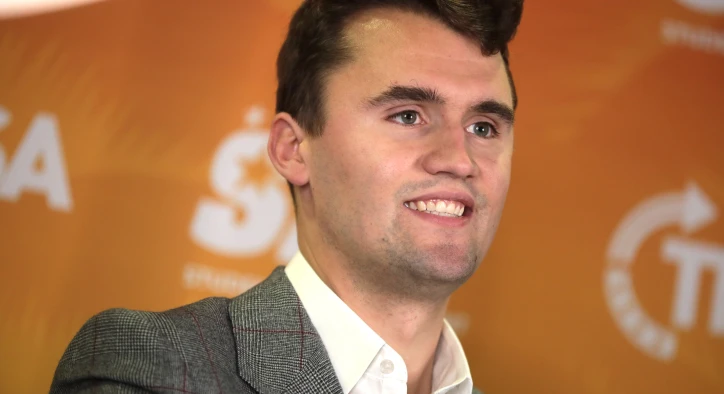

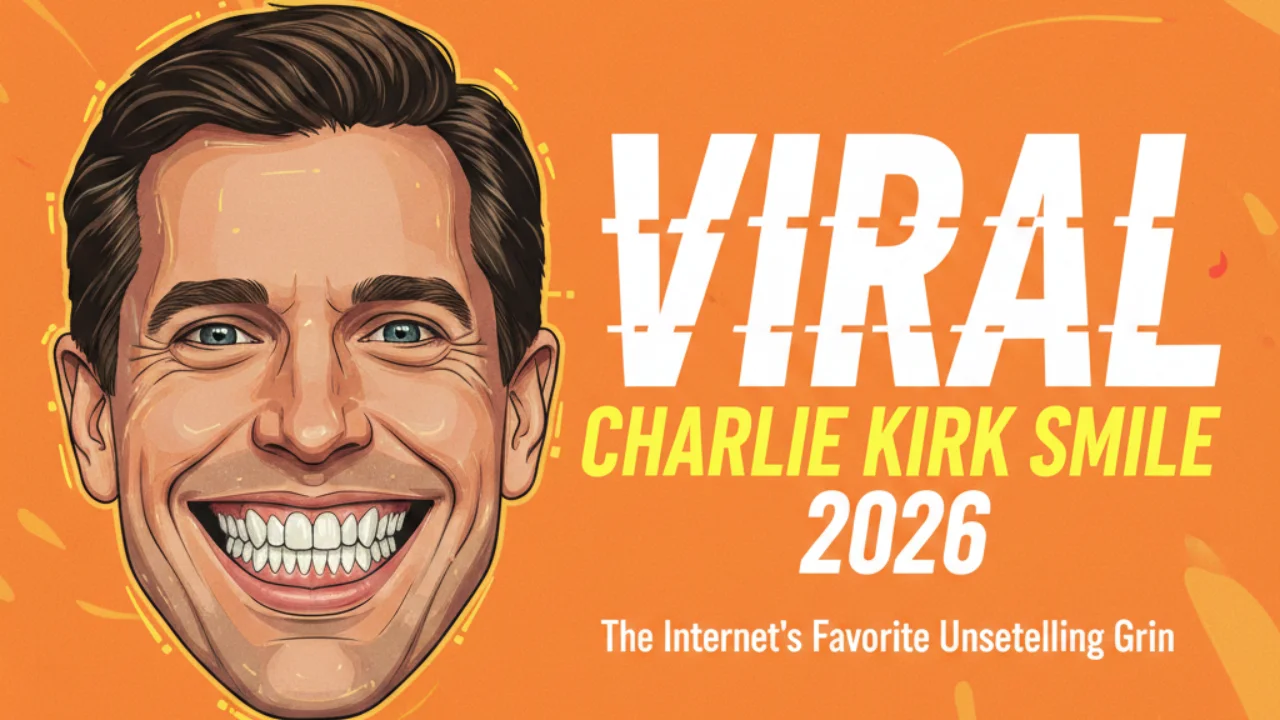
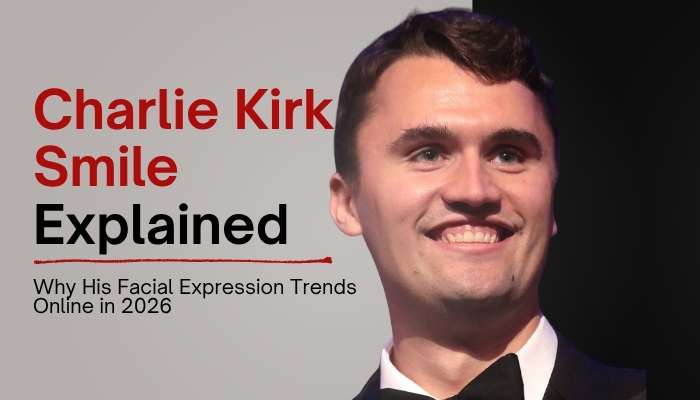
The Charlie Kirk smile has generated more sustained online discussion than most political figures experience about any single physical attribute.
What started as a recurring detail in clips and screenshots gradually became a reference point of its own — detached from the specific content of any debate or interview, circulating independently through meme communities, commentary threads, and aesthetic discussions. Understanding why that happened requires looking beyond the individual and into how digital platforms transform visual details into cultural currency.
Charlie Kirk Smile: How a Facial Expression Becomes a Symbol
The path from ordinary visual detail to internet symbol follows a recognisable pattern. Repetition is the first requirement. Charlie Kirk appears frequently across television interviews, campus events, debate formats, and social media clips. The volume of footage means his expressions are documented extensively, giving audiences large amounts of reference material to work with.
Algorithmic amplification handles the rest. When content labelled with specific phrases about a public figure’s appearance generates engagement — shares, comments, saves — platforms serve it to wider audiences. Each cycle brings more viewers to the same images, which increases both familiarity and the likelihood that someone will create derivative content. The smile stops being a moment in a video and starts functioning as a recognisable visual marker.
Contrast accelerates this process. Political discourse carries an expectation of seriousness. When a public figure appears to smile broadly in contexts where audiences expect gravity, the mismatch produces the kind of friction that generates attention. Frozen frames from those moments circulate more widely than footage of neutral or expected expressions would.
What Neuroscience Says About Smiling
Humans are wired to read faces before they read anything else. This is not a preference or a cultural norm — it is a function of how the brain processes information. Facial expressions, particularly smiles, are evaluated for authenticity and intent within fractions of a second, long before conscious analysis begins.
When a smile appears repeatedly in different contexts, audiences accumulate impressions from each encounter. These impressions layer into a general perception that can become quite fixed, even as the underlying expressions vary. The same smile in a relaxed interview and in a heated debate reads differently to the viewer — and those different readings build up into something more complex than any single moment would produce alone.
Research into facial perception consistently finds that audiences associate specific expression patterns with personality characteristics. These associations are not logically grounded — a person’s smile communicates very little verifiable information about their values or intentions — but they are psychologically real and they shape how public figures are received over time.
The Authenticity Question in Dental Aesthetics
Conversations about public figures’ smiles reliably expand into discussions about dental aesthetics, often without any confirmed information about whether the person in question has had cosmetic work done. The Charlie Kirk smile generated this kind of speculation, with audiences examining images for evidence of veneers, whitening, or alignment treatment.
This pattern reflects something genuine about how cosmetic dentistry has entered popular consciousness. When the tools for transforming a smile are widely known and openly discussed, any notable smile becomes a potential subject for that discussion — regardless of whether any treatment has occurred.
The broader aesthetic debate involves a tension that has not resolved. On one side, the polished Hollywood smile — symmetrical, bright, and uniform — has become associated with professional credibility and camera presence. On the other, audiences increasingly identify over-corrected dental aesthetics as artificial, and that artificiality registers as a trust signal of the wrong kind.
The middle range — noticeably improved without being conspicuous — is where most media professionals aim. A smile that reads as natural while presenting well on high-definition cameras achieves both goals simultaneously.
Natural Versus Enhanced: The Cultural Tension
The debate between natural and enhanced smiles plays out differently depending on the audience. Some viewers respond more warmly to visible individuality — slight irregularities, minor asymmetries, natural colouring variation. These features signal that no attempt has been made to conform to an idealised standard, which some audiences interpret as honesty.
Other audiences hold the opposite preference. A well-maintained, consistent smile reads to them as evidence of professionalism and care for presentation. Both positions are genuinely held and neither is irrational — they reflect different underlying assumptions about what appearance communicates.
For public figures who depend on audience trust, this tension is not academic. Choices about dental presentation carry implications for how different audience segments receive them. A conservative political figure has particular reason to avoid aesthetic choices that their audience might read as vanity or inauthenticity — which is why the most politically sustainable dental aesthetics tend to be moderate ones.
Memes and the Transformation of Public Identity
When a facial expression enters meme culture it acquires a life separate from the person it belongs to. Memes extract moments from their original context and reassign them meaning. A smile from a particular debate clip becomes a reaction image used across entirely different situations. The original event recedes; the expression remains as a reusable symbol.
This transformation is worth understanding because it illustrates something about how public identity is constructed in digital culture. A public figure’s visual identity is no longer controlled entirely by that figure or their communications team.
It is co-created by anyone with a screenshot and an audience. The expressions that become meme material are not always the ones the figure would have chosen — they are the ones that audiences found most useful for their own expressive purposes.
Once established, meme versions of a public figure’s expressions are often more widely encountered than the original source material. Many people who recognise the Charlie Kirk smile as a cultural reference have never watched the debate clip or interview from which it originated.
What the Fascination Reveals About Digital Culture
The sustained interest in the Charlie Kirk smile is less about Kirk specifically than about the broader conditions that produce this kind of viral attention. Digital platforms have made it possible for audiences to analyse public figures at a level of detail and repetition that was previously impossible. Every expression is documented. Every comparison is achievable. Every frozen frame is distributable.
This creates a new relationship between public figures and their physical appearance. Elements that would previously have been too minor to register — the precise character of someone’s smile, a specific expression in a specific moment — become subjects of extended collective analysis. The internet has made the ordinary extraordinary through the mechanism of scale and repetition.
The teeth specifically persist as a focal point across cultures because they sit at the intersection of health, aesthetics, and social signalling. Dental presentation communicates care, resources, and self-awareness simultaneously. It is visible, variable, and changeable — which makes it more interesting to audiences than fixed features.
FAQs
1. Why did the Charlie Kirk smile become a viral topic?
High visibility combined with repetition, algorithmic amplification, and the contrast effect of seeing expressive smiling in politically serious contexts.
2. Does psychology explain why people fixate on celebrity smiles?
Yes. Humans process facial expressions automatically and rapidly, forming impressions before conscious analysis operates.
3. What is the relationship between dental aesthetics and perceived trustworthiness?
Research shows that audiences associate even, well-maintained teeth with competence and professionalism.
4. Why do audiences debate whether public figures have had dental work?
Because cosmetic dentistry procedures are widely known and openly discussed, any notable smile becomes a candidate for that speculation.
5. What does the meme culture around celebrity expressions tell us about digital identity?
That public identity in the digital era is co-created between the individual and the audiences who generate derivative content from their images.