






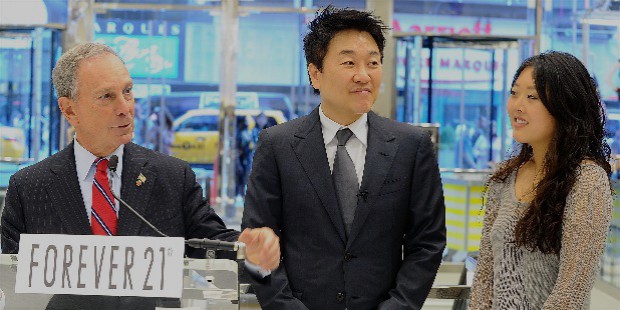

Who owns Forever 21? Run this thought experiment: a company can go fully bankrupt, shutter every physical location on an entire continent, and still technically exist as a functioning business asset. Sounds contradictory until you separate two things that used to be fused together — the brand and the retailer.
Forever 21 is the cleanest case study of that split you’ll find in modern retail, and untangling who owns what requires throwing out the assumption that “the company” is one thing.
Who owns Forever 21?
Authentic Brands Group owns Forever 21’s trademarks and intellectual property. That’s the entire ownership answer at the top level — no co-owners, no shared governance, nothing. ABG runs on a licensing model: they don’t operate stores themselves, they own brand names and rent them out to whoever wants to run the actual retail operation under that name.
Reebok works this way. Brooks Brothers works this way. Nautica works this way. Forever 21 just slotted into that exact same machine after its U.S. retail arm collapsed entirely.
What that licensing structure means practically: international Forever 21 stores and the brand’s e-commerce presence outside the United States are still operating right now, under licensing arrangements that have zero financial or legal connection to the bankrupt U.S. entity. If you buy a Forever 21 hoodie in another country today, you’re transacting with a completely different business than the one that just liquidated.
How the Ownership Actually Moved
Forever 21’s first bankruptcy forced a sale in February 2020, and three buyers split it for roughly $81 million — a number that on its own tells you how much value had already drained out of a brand that was pulling $4.4 billion in annual revenue just five years earlier.
The split: Simon Property Group took 37.5%, Brookfield Property Partners took 25%, and Authentic Brands Group took the remainder plus full control of the trademarks themselves — meaning even at this stage, ABG was always the IP owner regardless of how operational equity got divided among the other two.
Brookfield exited first, cashing out in 2021 for $63 million. Simon Property Group held on longer, finally walking away in December 2024 when the joint venture managing day-to-day operations — SPARC Group — reorganized into a new entity called Catalyst Brands. Forever 21 was deliberately left out of that restructuring. If you’re looking for the exact moment the writing appeared on the wall, that exclusion is it.
There’s a genuinely strange wrinkle buried in this timeline too: in 2023, Shein bought roughly a third of SPARC Group, while SPARC simultaneously held a minority stake in Shein. Two companies cross-invested in each other while one of them was actively winning the price war against the other’s flagship brand. That partnership did nothing to slow Forever 21’s decline.
The Mechanics of the Collapse
Strip away the corporate language and the failure mechanism here is straightforward: Forever 21’s entire competitive identity was built on speed and price — cheap clothes, fast inventory turnover, heavy mall presence. That model worked fine for decades because the competition was other physical retailers running roughly the same playbook at roughly the same speed.
Then Shein and Temu entered the picture running a faster, cheaper version of that exact same playbook, except fully digital-native and benefiting from something Forever 21 structurally couldn’t access — the de minimis tariff exemption, which let those competitors import goods into the U.S. duty-free.
CFO Brad Sell named this directly as the primary driver in the company’s official 2025 bankruptcy statement. Co-Chief Restructuring Officer Stephen Coulombe’s language in court filings was blunter still, describing Forever 21 as “materially and negatively impacted” by that exact dynamic — corporate phrasing for “we lost a price and speed war to companies engineered specifically to win it.”
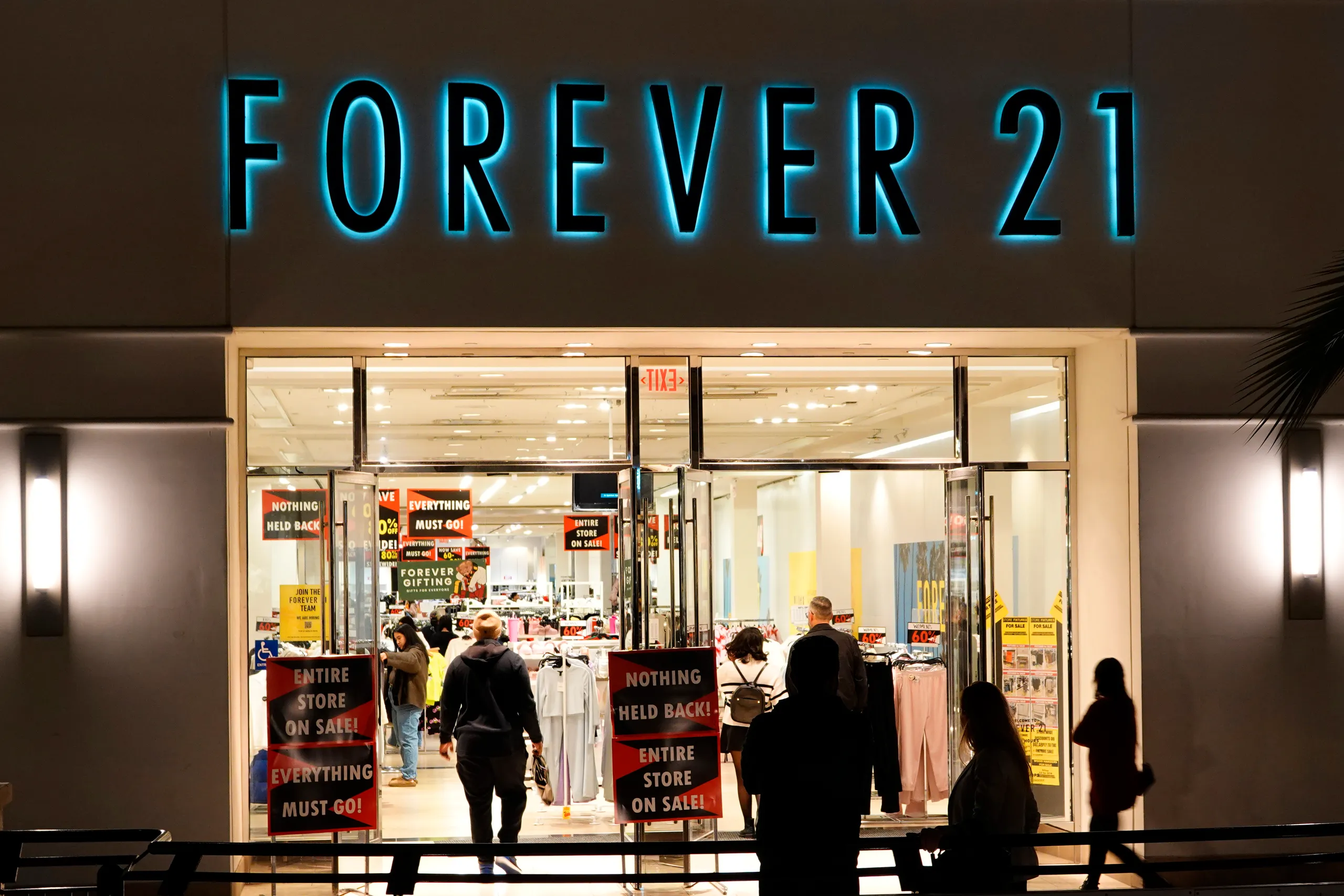
The financial damage accumulated over years rather than hitting all at once. Cumulative losses exceeded $400 million across the final three fiscal years leading into the 2025 filing. When F21 OpCo, the U.S. operating entity, filed Chapter 11 for the second time in six years that March, the outcome was already effectively locked in. All 354 remaining domestic stores closed by April 30, 2025.
The People Who Watched This Happen
Jamie Salter, ABG’s CEO, said something in 2024 that executives almost never say publicly about their own acquisitions: buying Forever 21 was “probably the biggest mistake I made.” That’s not spin or carefully managed PR language — that’s a direct, on-record admission that this specific licensing bet underperformed badly relative to the rest of ABG’s brand portfolio, which includes far more durable performers.
Jarrod Weber, ABG’s Global President of Lifestyle, handled the public messaging once the U.S. bankruptcy hit, drawing a clear line between the domestic liquidation and everything else — confirming explicitly that international operations and the underlying trademark ownership were entirely unaffected by what happened stateside.
On the Simon Property Group side, CEO David Simon’s posture throughout tells its own quiet story. Simon Property Group is the largest mall real estate investment trust in the United States, and retail ownership stakes like Forever 21 were always treated as secondary to the core real estate business — never the main event.
The REIT had been steadily reducing its exposure to retailer ownership stakes throughout 2023 and 2024, well ahead of the final 2025 collapse. Read that timing correctly and it suggests Simon’s leadership recognized the trajectory long before any public statement acknowledged it.
Where This Started: $11,000 and a Different Name
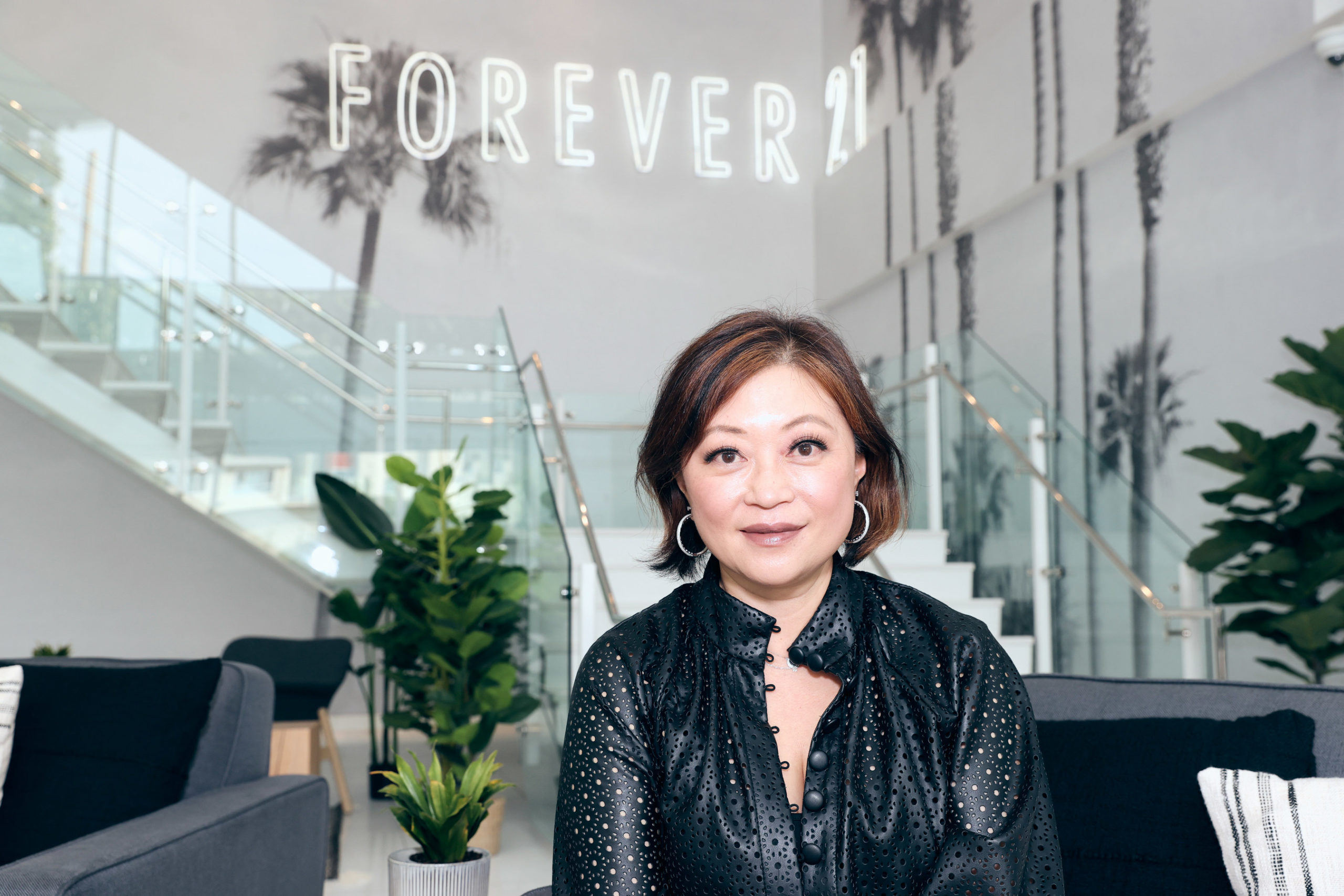
Context matters for understanding the scale of this collapse, so here’s the origin story compressed. Do Won Chang arrived in Los Angeles from South Korea in 1981, worked several jobs to get established, and in 1984 he and his wife Jin Sook opened a store on Figueroa Street called “Fashion 21” — built on roughly $11,000 in startup capital and aimed initially at the local Korean-American community.
The early numbers were startling relative to that small initial investment: approximately $700,000 in sales during the first year alone. That kind of return is exactly why the Changs kept expanding rather than staying small, and by the 2000s the chain had moved into shopping malls nationally, rebranded under the “Forever 21” name, and broadened its target demographic well beyond any single community.
2015 marked the absolute peak: $4.4 billion in global revenue, roughly 800 store locations, around 43,000 employees worldwide. From that high point, two compounding problems set in — continued physical expansion at exactly the moment retail was shifting digital, paired with a genuine failure to build competitive e-commerce infrastructure.
The name itself carries a strange irony in hindsight. Chang conceived “21” as representing peak youth — maximum energy, opportunity, self-expression at their absolute height — and added “forever” to make it an aspirational promise that customers could hold onto that feeling indefinitely through accessible, trend-driven clothing.
What Actually Sold on the Racks
For context on what the business actually consisted of before all this: women’s apparel including dresses, activewear, and swimwear formed the core category. Men’s clothing — casual shirts, hoodies, graphic tees — made up a smaller secondary line. Children’s and girls’ sizing scaled down adult trend cycles for younger shoppers.
Accessories spanned bags, jewelry, hats, and belts. A full beauty and skincare range existed alongside cosmetics and body care products. Footwear rounded out the catalog with sneakers, sandals, and boots.
None of this breadth was incidental — fast, broad, cheap inventory turnover across nearly every category was the entire strategic model, refreshed weekly to stay ahead of trend cycles faster than traditional department stores could manage. It’s exactly the model that worked brilliantly against 2000s-era competition and collapsed entirely against 2020s-era digital-native rivals who could move even faster at even lower cost.
FAQs
Who legally owns Forever 21 right now?
Authentic Brands Group, exclusively — they control the trademarks and intellectual property with no co-owners.
Is the brand completely finished?
No — only the U.S. retail and physical store presence is gone. International stores and online sales continue under separate licensing deals unconnected to the American bankruptcy.
What actually caused the final collapse?
Direct price and speed competition from Shein and Temu, both of which benefited from a tariff exemption that gave them a structural cost advantage Forever 21 couldn’t match.
Did Simon Property Group still hold a stake when the company finally collapsed?
No — Simon exited completely in December 2024, several months before the March 2025 bankruptcy filing.
Was Shein ever an actual owner of Forever 21?
Shein held a minority stake in SPARC Group, the joint venture managing operations, starting in 2023 — but that partnership had no measurable effect on reversing the company’s financial decline.