








Online fraud has grown remarkably sophisticated. Where older scams relied on obvious lies, modern schemes use polished websites, familiar brand names, and psychological pressure to make deception feel completely believable. Prizechecker. com sits firmly in this category — a platform that presents itself as a prize gateway but functions as a financial trap for unsuspecting users.
Thousands of people have encountered this scheme through social media feeds, email inboxes, and pop-up windows. Many have lost money without understanding what happened or how to recover it. This article explains the Prizechecker. com operation in full, outlines the risks involved, and provides practical steps for anyone who has already been caught out.
What Prizechecker. com Actually Is
At face value, Prizechecker. com appears to offer users a chance at winning expensive items — smartphones, gift cards, home electronics, or cash rewards. In reality, the site serves deceptive purposes entirely online.
This is an organised subscription scam — a trap that begins with a convincing advert and ends with unauthorised charges appearing on your bank account weeks later.
The Mechanics of the Online Scam
Every element of the Prizechecker. com online operation has been thought through. Each step builds on the previous one to make the eventual moment of financial capture feel natural rather than suspicious.
Stage One — Gaining Attention
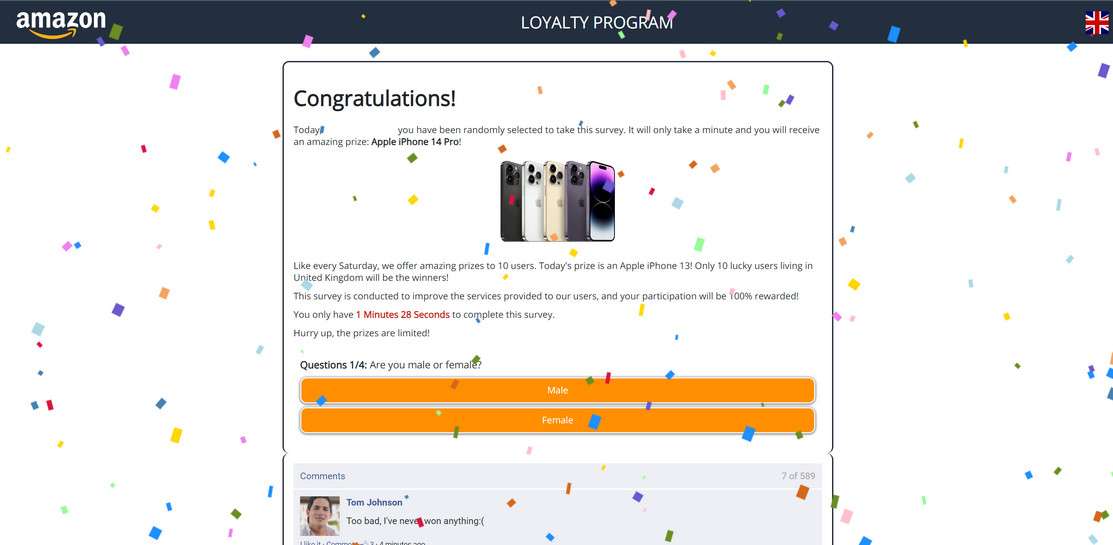
The process starts with an ad. It might appear on a social media platform, inside a spam email, or as a pop-up on a video streaming or file download site. The message is designed to feel personal and timely: you have been chosen from a limited number of visitors to claim a high-value reward. Specific numbers — “you are visitor number 5,000” or “only 3 prizes remaining” — add false credibility and create pressure to act without pausing to think.
Household brand names are woven throughout this stage. Familiar logos from retailers and technology companies appear alongside the prize claim, borrowing trust from companies that have nothing to do with the scheme.
Stage Two — The Landing Page Experience
Arriving at the Prizechecker. com site, visitors find a page built to look entirely legitimate. Several features work together to sustain that impression:
- Countdown clocks suggest the offer expires within minutes
- Fabricated reviews and winner photographs imply others have already collected real prizes
- Trust seals and padlock icons signal security without any genuine verification behind them
- The overall design mirrors the visual language of established retail websites
This level of polish is intentional. First-time visitors have no immediate reason to question what they are seeing, which is precisely why the design works.
Stage Three — The Completion Task
Before claiming anything, users are invited to answer a short set of questions — typically three — about their preferences or habits. The questions themselves are meaningless. Their function is behavioural: completing a task creates a sense of investment in the outcome. People who have spent time doing something are psychologically more motivated to see it through to the end.
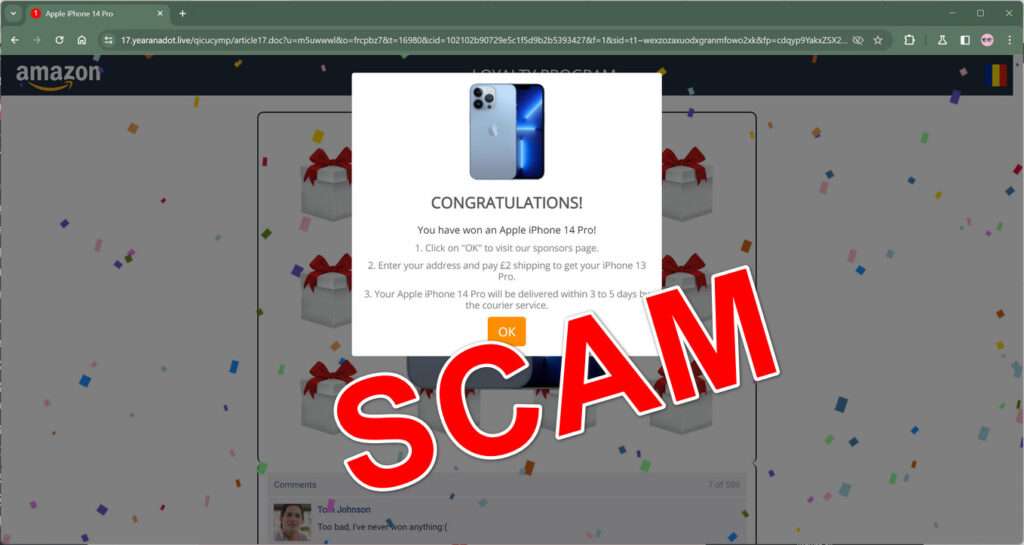
Once the survey is done, an interactive element — a spinning wheel, a scratch card animation, or a box selection — confirms that the user has won the top prize. This outcome is pre-programmed. Everyone who reaches this stage is told they have won.
Stage Four — The Payment Request
The scheme reaches its critical point here. The prize is described as completely free, with only a minor delivery charge standing between the user and their reward. This fee is typically between £8 and £12. Presented against the supposed value of the prize, it feels inconsequential.
What happens when the card details are entered goes well beyond covering postage. The scam operators now possess the full payment credentials needed to enrol the victim in recurring billing arrangements — arrangements the victim never knowingly agreed to, with companies they have never encountered.
Stage Five — The Consequences
No prize is dispatched. Instead, within a fortnight of the initial transaction, unfamiliar charges begin appearing on bank and card statements. These are monthly subscription fees — typically ranging from £45 to well over £150 — attached to services like digital toolkits, wellness programmes, or entertainment platforms. The companies billing these amounts are often difficult to contact and even harder to get refunds from.
What Happens to Personal Data
Beyond the financial dimension, submitting information to Prizechecker. com creates a longer-term data risk. Names, delivery addresses, phone numbers, and email addresses entered during the prize claim process are frequently passed on to third-party data brokers or sold in batches to other marketing operations.
The result for victims is a sustained increase in unsolicited contact — telemarketing calls, phishing messages pretending to be from banks or parcel carriers, and spam emails that arrive in growing volume. In the most serious cases, full card details obtained through the fake shipping payment have been linked to further fraudulent transactions or attempts to open credit accounts.
Who This Scam Targets
| Group | Reason for Vulnerability |
|---|---|
| Frequent social media users | Scam adverts are formatted to look identical to genuine sponsored posts |
| People aged 50 and over | Less exposure to how subscription trap scams are typically constructed |
| Those experiencing financial pressure | A prize offer carries disproportionate appeal when money is tight |
| Habitual online shoppers | Familiarity with paying small delivery fees removes a natural point of hesitation |
| Mobile users | Compact screen sizes make terms, logos, and URLs harder to scrutinise |
Awareness of these patterns does not make anyone immune, but it does sharpen the instinct to pause before acting.
Recovering from the Prizechecker. com Scam
Speed is the most important factor in limiting damage. If you have submitted payment details to this site, work through the following steps without delay.
Check every recent transaction Pull up your bank and card statements and review all activity from the past three months. Make a written list of every charge you do not recognise, noting the date, amount, and company name shown on the statement.
Challenge the subscription companies Contact each company billing you and make clear that you never agreed to their service. Request immediate cancellation and a refund. Ask for written confirmation of the cancellation. Keep a record of who you spoke to and when — this documentation becomes useful if you need to escalate.
Raise a dispute with your bank Phone your bank or card provider and explain that you have been subjected to a fraudulent subscription scheme. Ask them to initiate a chargeback for the original delivery payment and any subsequent charges. Most banks have dedicated fraud teams for exactly this type of case and will guide you through the process.
Close the compromised card The only reliable way to stop future billing attempts on the same details is to cancel the affected card entirely and request a replacement with a new number. Do not assume changing your PIN is sufficient — the card number itself is what the scam operators have on file.
Secure all associated accounts Change the password on any account linked to the email address you used. Where possible, activate two-factor authentication, particularly on email and banking accounts. This prevents scam operators from using captured credentials to access your other accounts.
File an official report Report what happened to the relevant authority in your country. In the UK this is Action Fraud at actionfraud.police.uk. In the United States, complaints go to the Federal Trade Commission through reportfraud.ftc.gov. Reporting these incidents helps investigators identify wider patterns and take action against the operations running them.
Habits That Prevent This Scam
The most effective protection is building a few consistent habits around how you engage with online offers.
Treat any unsolicited notification of a prize as suspicious by default. Entering a competition you remember signing up for is legitimate; being told out of nowhere that you have won something you never entered is not.
Refuse to pay any fee — however small — in order to receive a prize. Delivery charges on genuine promotions are covered by the company running them, not passed on to winners.
Before entering details on any unfamiliar site, search the site name alongside the word “scam” or “review.” This takes under a minute and surfaces warnings from other users almost immediately.
Read whatever text appears near any payment field. Subscription traps disclose their terms — in very small print, phrased to be difficult to parse — but they do disclose them. Taking thirty seconds to read this text can prevent months of unwanted charges.
FAQs
1. Is Prizechecker. com a genuine prize platform?
No. The site does not award real prizes. It exists to extract payment information and enrol users in recurring billing arrangements without their genuine understanding or consent.
2. The logos of well-known brands appear on the site — does that mean it is trustworthy?
No. These logos are displayed without authorisation from the companies they belong to.
3. I only paid the delivery charge — is my account still at risk?
Yes. Entering your card number to pay that fee gives the operators everything they need to bill you for subscriptions.
4. My bank is asking whether I authorised the charge — what should I say?
Explain that you were misled. This counts as fraud under most banking regulations and entitles you to raise a chargeback claim.
5. What should I do about the personal details I submitted?
Be alert to an increase in unsolicited calls, texts, and emails. Do not engage with unexpected contact claiming to be from your bank or a delivery company.
6. Is it possible to recover the money lost to this scam?
Partial or full recovery is possible in many cases, particularly when victims act promptly.
7. How do I report this scam?
UK residents should report to Action Fraud at actionfraud.police.uk. US residents can file with the FTC at reportfraud.ftc.gov.